Porcelain and natural stone are the two paving choices most homeowners weigh up for a new patio, and both can look superb. They behave very differently underfoot and over time, though, so the right answer depends on how you want the space to look, feel and age.
The quick verdict
Choose porcelain for a crisp, low maintenance, contemporary finish that stays looking the same year after year. Choose natural stone for character, warmth and a surface that mellows and belongs in an older or rural setting. Neither is simply better — they are different materials for different gardens.
Cost
As a rule, budget natural stone such as sandstone can be cheaper to buy than porcelain, while premium natural stones like granite and Yorkstone cost more. Porcelain sits in the middle to upper range on material. The gap narrows once you include laying, because porcelain must be laid on a full mortar bed with a primer or slurry coat, which is more exacting work than bedding some natural stones.
Durability and maintenance
- Porcelain is virtually non porous — it resists stains, moss and algae and never needs sealing.
- Natural stone is porous to varying degrees, can stain from wine, oil or leaves, and benefits from sealing and occasional cleaning.
- Porcelain colour is stable and will not fade; natural stone weathers and changes tone over time, which many people love.
- Porcelain is extremely hard wearing but can chip on a sharp impact; natural stone is more forgiving of knocks.
Grip and safety
Modern outdoor porcelain is manufactured with a textured, anti slip surface and performs very well when wet, which is a genuine advantage around pools and steps. Natural stone grip varies by type and finish — riven surfaces grip well, while smooth sawn or honed stone can be slippery when wet unless specified with a textured finish.
Most patio failures are not about the slab you chose — they are about the base it was laid on. Both materials live or die on the groundworks beneath them.
Looks and setting
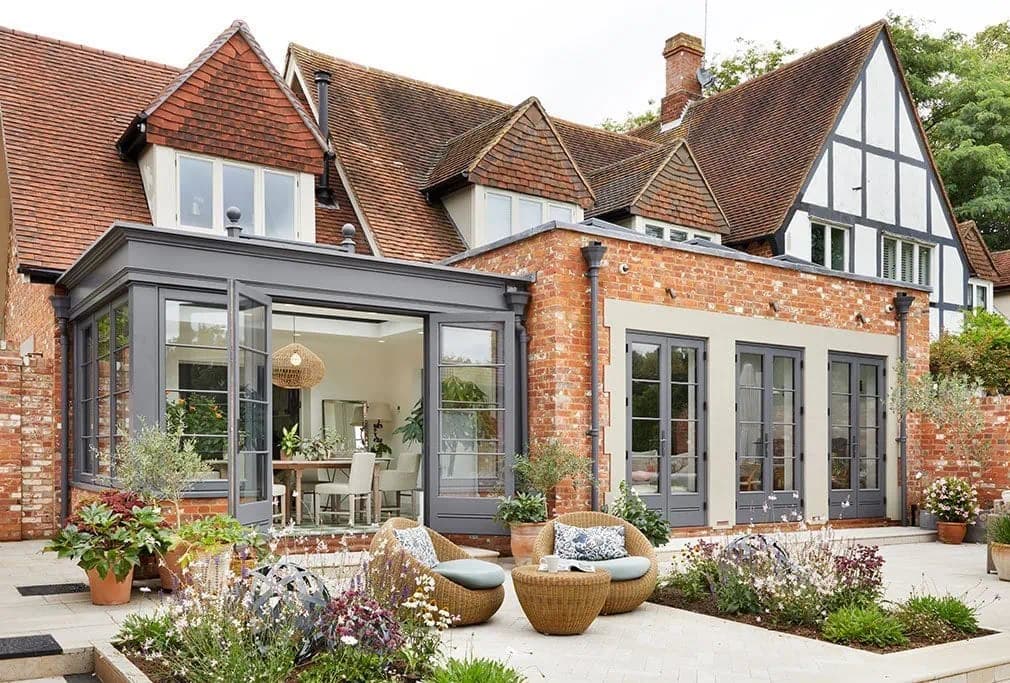
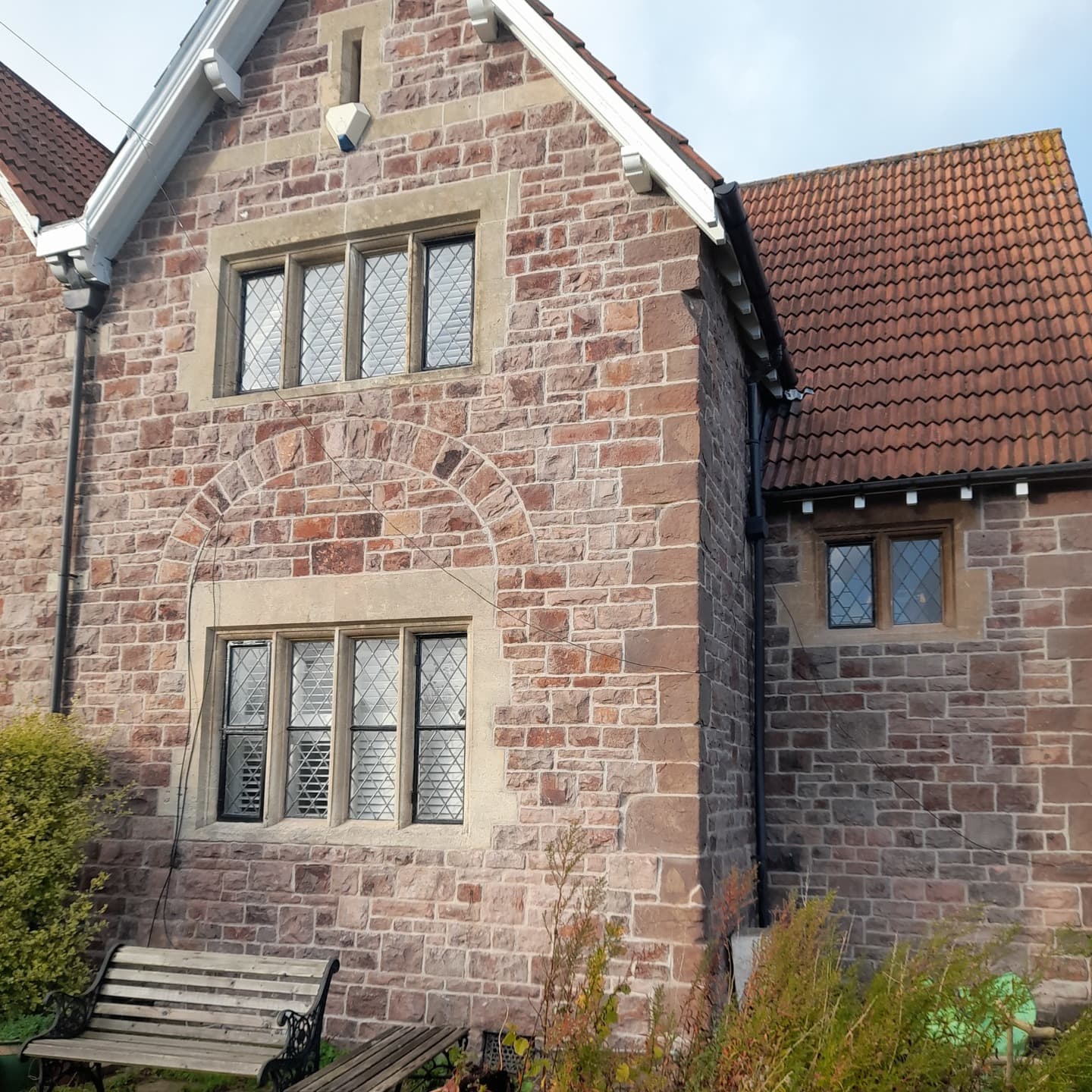
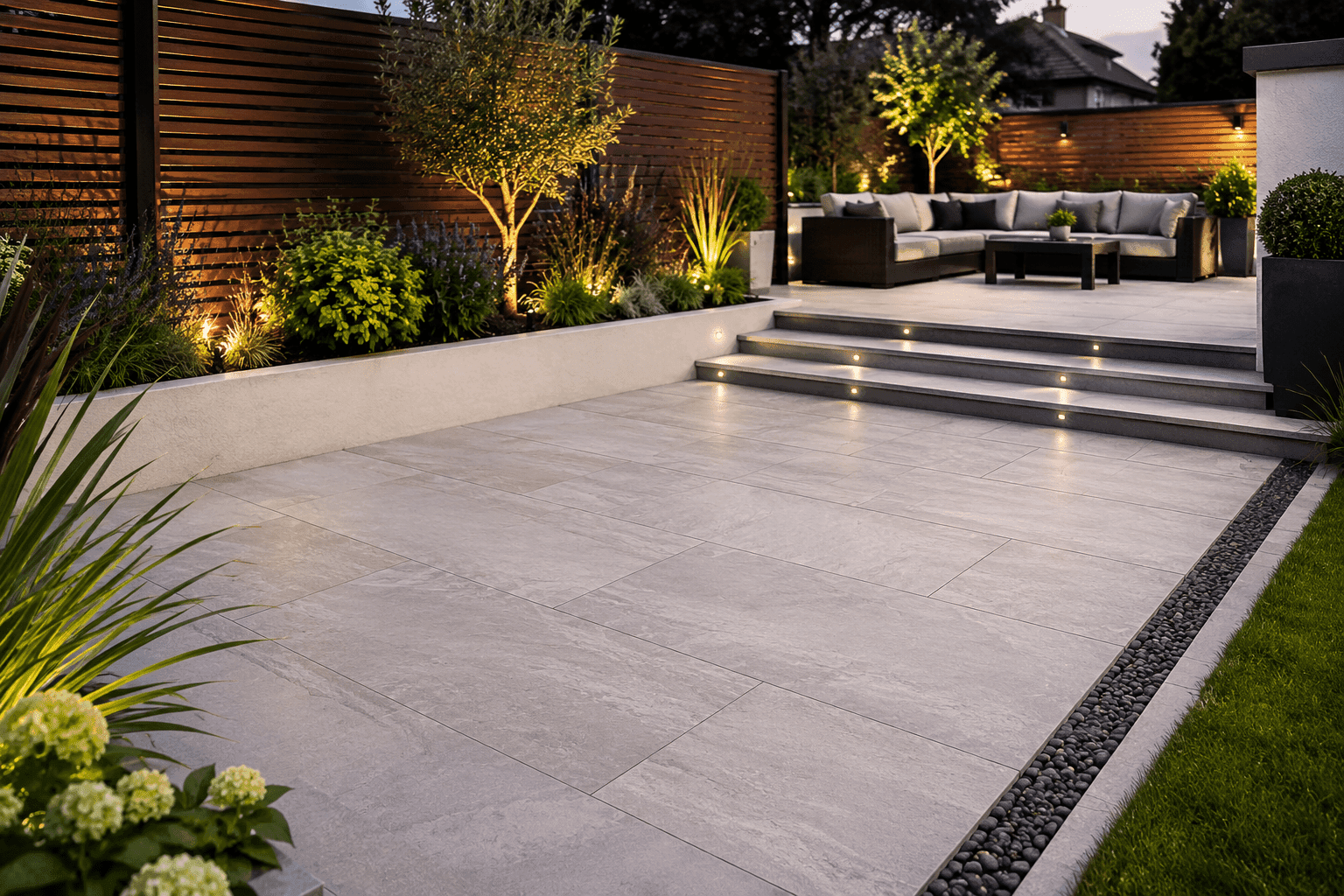
Porcelain gives clean lines, consistent colour and tight joints — perfect for a modern extension, a rendered house or a minimalist garden. Natural stone brings variation from slab to slab, a tactile surface and a softness that suits period properties, cottage gardens and rural plots. If your home is traditional, natural stone will usually sit more comfortably against it.
Frequently asked questions
Which lasts longer?
Both will last decades when laid properly. Porcelain keeps its appearance with almost no upkeep; natural stone lasts just as long but changes character as it weathers.
Is porcelain slippery?
Quality outdoor porcelain is made with an anti slip texture and grips well when wet — often better than smooth natural stone.
Can I lay either myself?
Porcelain in particular is unforgiving and needs a full mortar bed and primer. For a lasting, level patio with correct falls for drainage, professional groundworks are strongly recommended.
LJS Construction Services lays porcelain and natural stone patios across Kent and South London, with the groundworks, falls and drainage that make the difference between a patio that lasts and one that lifts.
Thinking about landscaping?
LJS Construction Services carries out landscaping across Kent and South London. If you would like honest advice and a clear quotation, we would be glad to help.